
FORSETH: The BC Conservatives’
resurgence that saved British Columbia
BC voters reject David Eby’s
NDP in favour of accountability.
Election night was not
rewarding for former premier David Eby and the BC NDP, but it was a great night
for Lorne Doerkson and the BC Conservatives. The free enterprise coalition held
together this time, despite burning through two party leaders since the last
election; it won with the third. The Conservatives benefited greatly from the
government's dismal record and the resented surprise early election call.
The legacy media will talk
about Eby’s blunder rather than voters’ successful rejection of leftie ideology
and maladministration. They will write about “what happened and what went
wrong” instead of celebrating liberation and accountability.
We recall that, despite the
unpredicted electoral rise in 2024, the BC Conservative coalition was tenuous
under then-leader John Rustad. He was ousted, and a province-wide party race
elected Kerry-Lynne Findlay, who served as leader only from May to September
before she was forced to resign. The Conservative MLAs then quickly appointed a
new leader from within their ranks who had never sought the job.
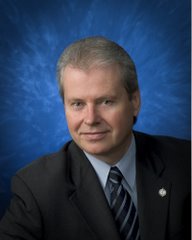
MLA Lorne Doerkson, now
Premier-elect, was an improbable leader. He is the MLA for Cariboo-Chilcotin
and was first elected in 2020 as a BC Liberal. He crossed the floor to be the
third MLA to join the rising BC Conservative Party in the spring of 2024 and
was elected as a Conservative on October 19, 2024.
Previously, under the BC
United banner, Doerkson served as opposition critic for rural development and
as the party's deputy whip. Then his defection from BC United came as efforts
to reach a possible non-competition deal between the two parties broke down.
Observers recall the stunning political move that followed, when Leader Kevin
Falcon collapsed the BC United Party's campaign. Supporters had already voted
with their wallets, and the Kevin Falcon electoral bid evaporated. Falcon's
manoeuvre tried to follow public opinion polls that were strongly coalescing
behind the BC Conservatives to replace the NDP. It almost worked in the October
19, 2024, election.
Doerkson was re-elected under
the BC Conservative banner and was named assistant deputy speaker. Doerkson
took over on September 20 from Leader Findlay, who stepped down after a caucus
revolt following just 113 days as leader.
Doerkson was recommended by
the MLAs of the Conservative caucus and approved by the party's board of
directors. The move followed weeks of speculation that Premier Eby would call
an election to exploit discord among the opposition Conservatives.
Doerkson was reached by phone
at the Amsterdam airport, where he was on a layover after attending a
Commonwealth Parliamentary Association conference in South Africa. The MLAs
asked if he would take on the leadership. But Doerkson didn't know until his 12-hour
flight landed in Vancouver that he had indeed been confirmed as the
Conservative leader. Soon he also learned that he would lead his party in a
provincial election.
Eby moved to take advantage.
At first, he tried to make the election about opposition to Trump. Then it was
about needing a stronger majority in the BC Legislature. Finally, it was just
fearmongering about extremism within the Conservative ranks. In desperation,
Eby called Doerkson a Trojan horse for extremism. On the last day of the
campaign, Eby said British Columbians may think they know what they’re getting
with Doerkson, but behind him is a party of extreme candidates.
David Eby's entire campaign
had collapsed into pure fearmongering. When he had few achievements to show, he
resorted to calling his opponents names. Voters asked who really was extreme.
It was the NDP whose decriminalization policy turned public parks into open
drug sites and whose DRIPA laws threatened private home titles. Taxpayers
didn't fear fiscal responsibility, but they were exhausted by high taxes and
record-breaking deficits, while rural emergency rooms and mills closed. Eby had
no credible plan to build the economy, lower living costs, cut red tape, and
get BC back to work. He forgot that democracy isn't about voting out of fear —
it is about holding a failing government accountable for performance.
In contrast, the BC
Conservatives presented a modest platform to get out of the way of business to
grow the economy while focusing on fiscal responsibility and eliminating the
pernicious deficit. The Conservatives were also strong on law-and-order issues,
especially on plans to respond to street crime and open drug use.
Secret deals with First
Nations, made without political licence and community consultation, also
simmered in the background. Each day of the campaign, the Conservative website
announced another fix for an NDP policy mistake.
Nevertheless, the NDP's most
damaging legacy was economic. They tried to deflect by claiming they didn't
have a spending problem but a revenue problem. That was partly true, as
revenues suffered because their ideology had shut down the forest sector, and
their bureaucratic approach added layers of disincentives for business. They
were responsible for killing the economy. However, they also had a reckless
spending problem that didn't seem to benefit the average worker. The Eby
administration had inherited a fiscal surplus, which it soon turned into a $14
billion deficit.
Local candidates added
important nuance to specific local problems the NDP had left unresolved. Yet in
the end, it became a personality contest between the activist lawyer and the
mild-mannered, middle-aged businessman. Whom do you trust in this time of uncertainty
and economic pressure from the United States? Many British Columbians chose the
Conservatives and gave them an overwhelming mandate in the 93-seat Legislature.
The Conservatives won 64 seats, the NDP won 27, and the Greens held their two
seats.







No comments:
Post a Comment