
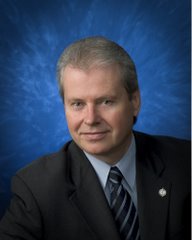
Prime
Minister Carney promotes revisionist history while being smarmy about the USA. Carney
is into denialism about Canada's origins. He derided USA Secretary of State
Marco Rubio for his implied references to historical Christian nationalism when
he spoke about the similarities of values between the USA and Europe.
In
contrast, Carney went out of his way to claim that Canada has civic
nationalism, not the USA's historical character. I don't know what audience Carney
was pitching to. However, Carney’s underlying attitude helps explain why
Liberal Canada is not as successful as it could be. There
is a lack of humility and accountability from the Canadian Liberal cadre.
Prime
Minister Carney does not want to know or express Canadian history. Lynette
Bloedow says Bob Marley, the famous Jamaican who made Reggae a world-renowned
music genre, quoted an African proverb in one of his songs. It said, 'In the
abundance of water, the fool is thirsty.'
I want to put my own spin on it in relation to our politicians and the
Peace Tower (Parliament). In the abundance of Scripture verses carved in the
building, our politicians appear to be God-hating pagans. Every single day,
politicians like our Prime Minister Mark Carney, walk right by the Peace Tower.
They are not aware of the Scripture verses preaching the gospel to them from
the Peace Tower, nor the Christian history laid down by our forebears.
Let
me explain the contexts of just two of the 25 Scripture verses from the Peace
Tower. These are in the West Stained Glass Window. One Scripture verse says, 'Thou
shalt make thy way prosperous’. This comes from Joshua 1:9. The next
Scripture verse, 'Wise in heart and mighty in strength', is from Job 9:4.
But when Joshua 1:9 is read in context from verse 6, that verse in the window
has a very specific meaning.
6 Be strong and of a good courage: for unto this people
shalt thou divide for an inheritance the land, which I sware unto their fathers
to give them. 7 Only be thou strong and very courageous, that thou mayest
observe to do according to all the law, which Moses my servant commanded thee:
turn not from it to the right hand or to the left, that thou mayest prosper
withersoever thou goest. 8 This book of the law shall not depart out of thy
mouth; but thou shalt meditate therein day and night, that thou mayest observe
to do according to all that is written therein: for then thou shalt make thy
way prosperous, and then thou shalt have good success. 9 Have not I commanded
thee? Be strong and of a good courage; be not afraid, neither be thou dismayed:
for the Lord thy God is with thee whithersoever thou goest.
When
Job 9:4 is read in context from verse 1, it reads: 9 Then Job answered and
said, 2 I know it is so of a truth: but how should man be just with God? 3 If
he will contend with him, he cannot answer him one of a thousand. 4 He is wise
in heart, and mighty in strength: who hath hardened himself against him, and
hath prospered?
In
recognition of the sacred, at the opening of the daily sitting of the House of
Commons, the Speaker reads a prayer while all stand. Prayer has been part of
the daily House proceedings since 1877. When finished, the House pauses for a
moment of silence for private reflection. “Almighty God, we give thanks for
the great blessings which have been bestowed on Canada and its citizens,
including the gifts of freedom, opportunity and peace that we enjoy. We pray
for our Sovereign, King Charles, and the Governor General. Guide us in our
deliberations as Members of Parliament, and strengthen us in our awareness of
our duties and responsibilities as Members. Grant us wisdom, knowledge, and
understanding to preserve the blessings of this country for the benefit of all
and to make good laws and wise decisions. Amen.”
(Forseth)
Why is this important? Because of what just transpired on the world stage. Our
Prime Minister does not want to acknowledge our history. He does not express
humility or accountability. He promotes the concept of "Civic
Nationalism" to distance Canada from the USA, thereby implying that Canada
is superior in mind to the USA, a claim Carney derides as mere "Christian
Nationalism".
In
my view, Canada is a constitutional monarchy under the authority of a
Judeo-Christian God. We were established as "The Dominion of Canada,"
as referenced in Psalm 72:8: "He shall have dominion also from sea to
sea, and from the river unto the ends of the earth."
By
legal definition, governance flows from the Crown. The Crown derives its
authority from God, who is by definition the God of the Bible and no other. The
King of Canada recently received his power and authority to become King, in a
Christian Church with a Christian liturgy and many prayers, and thereby
received a Christian Crown. Among numerous Christian symbols, he humbly prayed,
"God of compassion and mercy, whose Son was sent not to be served but
to serve, give grace that I may find in thy service perfect freedom and in that
freedom knowledge of thy truth. Grant that I may be a blessing to all thy
children, of every faith and belief, that together we may discover the ways of
gentleness and be led into the paths of peace, through Jesus Christ our Lord.
Amen."
While
the Canadian administration is secular, non-partisan, and does not promote any
religion, in 1998 the Supreme Court of Canada identified supporting principles
that are included as unwritten elements of the very fabric of Canadian law:
federalism, democracy, constitutionalism, the rule of law, and respect for
minorities.
The
Canadian Charter of Rights and Freedoms opens with the following preamble: “Whereas
Canada is founded upon principles that recognize the supremacy of God and the
rule of law.” It is the God of the
Bible to the exclusion of all others.
US
Secretary of State Marco Rubio addressed the Munich Security Conference, held
from February 13 to 15, 2026. In his address, he spoke of Europe's common
Christian heritage and how it gave rise to the Americas. He pointed to a common
bond and a common destiny.
In contrast, our PM Mark Carney derisively labelled the Robio speech as promoting "Christian Nationalism". Carney claimed that Canada does not have Christian Nationalism but rather "Civic Nationalism." What is this Canadian fiction that our PM promotes? Mark Carney does not know our Christian history and our essence as a people. In fact, we have a great Christian Heritage. We should know our Canadian history, political origins, and cultural foundations. The Christian ethic is the ancient struggle for responsibility, accountability, justice, freedom, and neighbourliness, as every soul is equal before a loving and just God. Love the Lord your God with all your heart, soul, and mind, and love others as much as you love yourself. Matt 22:37-39.
(Rubio) “Under President Trump, the United States
will once again take on the task of renewal and restoration… And while we are
prepared, if necessary, to do this alone, it is our preference, and it is our
hope to do this together with you, our friends here in Europe," said
Secretary of State Marco Rubio as he delivered remarks at the Munich Security
Conference in Germany. Rubio's remarks focused on a shared heritage of the
transatlantic relationship with Europe, reforming the United Nations, European
defence, mass migration, and securing supply chains. He also touched on the
need for a relationship with China and negotiations to resolve the
Russia-Ukraine War. His remarks were similar to those given by Vice President
JD Vance a year earlier, as both stressed the importance of not losing a shared
culture to mass migration. This implies the benefits of Christian heritage and
its positive values.
Mark
Carney deliberately chose to deliver his rejection of Christian nationalism to
a Montreal audience, declaring that Canada is built on "civic
nationalism," not Christian values. He downplayed our deep Christian
heritage in favour of vague "inclusivity" and shared cold winters.
But he avoided the very first words of our Charter of Rights and Freedoms that
recognizes the supremacy of God.
How
does that square with erasing God from our founding story? Yet when speaking to
Muslim communities, Carney has no trouble wrongly equating their faith with
Canada: "The values of community, of generosity, and yes, of sacrifice.
These are Muslim values; these are Canadian values." Our Christian roots become minimized, but
Muslim values are proudly declared "Canadian values"? Like his
predecessor, Carney is rewriting history to fit a secular, arrogant, boastful,
cultureless internationalist character.
Canadian
society wasn't built on multiculturalism. It was forged by faithful Christian
settlers who carried the supremacy of God into our laws, our motto, and our
very identity. The freedoms and rights which flow from Christianity were
foundational for the acceptance of waves of immigration, while with compassion,
they tried to consider aboriginal peoples. To respond to "the French
fact" and Quebec separatist sentiment, Prime Minister Pierre Trudeau
introduced "multiculturalism" in 1971.
Carney's
"civic nationalism" is a hollowing out of the soul of the nation that
has kept us strong. Carney emphasized the importance of protecting our rights
and our system of respecting all the people who live here. Speaking at the
unveiling of Canada's Defence Industrial Strategy, Prime Minister Mark Carney
addressed the characterization by some in the Trump Administration of
"Christian nationalism," and he made it clear that Canada is not of
that nature.
Carney
explained that Canadian nationalism is "Civic nationalism," that is
respectful of people of all faiths, those with no faith, and respectful of the
rights and diversity of Canadians. Carney said, "Mr. Rubio has spoken,
and the American administration from time to time talks about Christian
nationalism. It is not Canadian nationalism. Canadian nationalism is civic
nationalism."
Carney
may try to rewrite who we are as Canadians because he does not like being
humble or accountable, as our King is. Canada is one of the oldest
constitutional monarchies in the world. Our newly added Charter in our
Constitution that guarantees rights and freedoms, begins with a recognition of
the supremacy of God. Our national anthem says, “God keep our land glorious
and free!” We are a Dominion under God, inspired by Psalm 72:8: "He
shall have dominion also from sea to sea, and from the river unto the ends of
the earth." This is also echoed
in Canada's motto: 'A Mari Usque Ad Mare (Latin for 'from sea to sea').
Moreover,
our Constitution is more than a written text. It embraces the entire global
system of rules and principles which govern the exercise of constitutional
authority. A superficial reading of selected provisions of the written
enactment, without that context, may be misleading.
In
practice, there have been other sources of unwritten constitutional law:
Conventions:
Constitutional
conventions form part of the Constitution. They include the existence of the
office of the Prime Minister and the Cabinet, and the requirement that the
Prime Minister either resign or request a dissolution and a general election
upon losing a vote of "confidence" in the House of Commons. The
existence and power of political Parties in the House of Commons is mostly
unwritten.
Royal
prerogative
Reserve
powers of the Canadian Crown, being remnants of the powers once held by the
British Crown, were reduced over time by the parliamentary system. Primarily,
these are the Orders in Council, which give the government the authority to
declare war, conclude treaties, issue passports, make appointments, make
regulations, incorporate, and receive lands to the Crown.
Unwritten
principles
Principles
that are incorporated into the Canadian Constitution by the preamble of the
Constitution Act 1867, include a statement that the Constitution is "similar
in Principle to that of the United Kingdom", much of which is
unwritten. Unlike mere conventions, these are justiciable. Amongst those
principles most recognized as constitutional are federalism, liberal democracy,
constitutionalism, the rule of law, and respect for minorities. Others include
responsible government, representation by population, judicial independence, no
taxation without representation, and parliamentary supremacy. Also, the
Governor General's unwritten powers are very broad but kept in reserve.
The
government's philosophy is important and goes well beyond an academic
discussion. It reflects the underlying political attitude and motives and
explains why Canada has been financially unsuccessful since 2015.
Canadians
are hurting. In response, there is a lack of humility and accountability from
the Canadian Liberal cadre. The evidence is that the Liberal Party's style of secular
humanism and civic nationalism does not meet the Canadian human challenge of
2026.










2 comments:
Thanks for posting. Quite a long thing you wrote, but worth it. Interesting documentation that I never heard before -King’s prayer -amazing. No one is writing about this -the deeper ideological bent of present Liberalism. You expose some scary stuff about our PM and his gang. They need to be exposed and denounced.
Thanks for posting. Canada is more than what is seen from the Toronto CN tower. The deep cultural decency of helpful neighbours does not come from Marx, Rousseau, Nitsche, or Burke. It comes from Christians and their foundational concept of service to others and accountability to God. I don’t think Carney or Liberals ever think they are accountable to anyone.
Post a Comment